Buduprofi
Professional beauty supply platform · Salon network acquisition
Buduprofi is a B2B platform supplying professional materials and tools to beauty salons in Spain. The business model requires high average order values — salon networks and large studios, not individual masters. Previous contractors generated traffic volume but consistently attracted the wrong buyer profile.
At audit: three separate GA/GA4 accounts tracking the same traffic with no reconciliation, no Merchant Center setup, and a Smart Bidding model trained on individual manicurist conversions. Every optimization pass deepened the problem. The budget wasn't failing to convert — it was converting the wrong audience at scale.
Three independently configured GA/GA4 instances tracked the same user sessions, each with different event schemas and conversion definitions. Each gave a different revenue figure for the same period.
Tracked basic pageviews and goal completions — no ecommerce events, no basket data
Partial ecommerce setup — captured some purchases but missed session source attribution
GA4 with incomplete event schema — no conversion linking to ads, Smart Bidding signal corrupted
The campaign's historical audience was dominated by individual masters — a segment that converts on small, infrequent orders. Rebuilding required both adding the right segments and explicitly excluding the wrong ones.
| SEGMENT | TYPE | ACTION |
|---|---|---|
| Salon managers (chain/network) | Target | ✓ Bid up · dedicated ad copy |
| Wholesale procurement buyers | Target | ✓ Bid up · B2B Shopping priority |
| Studio owners (5+ chairs) | Target | ✓ Custom intent audience + EDM retargeting |
| Individual manicurists | Exclusion | ✗ Excluded from all campaigns |
| Home-based masters | Exclusion | ✗ Excluded from all campaigns |
- →Merchant Center overhaulNew product feed
Rebuilt feed with correct attributes, regular price/availability sync, and B2B-oriented product titles — replacing generic consumer descriptions
- →Free Listings activatedZero-cost B2B filter
Free Shopping listings attract procurement-intent queries at no media cost — a passive filter that surfaces wholesale buyers and purchasing managers
- →B2B Shopping campaignsSeparate from consumer
Dedicated Shopping campaigns for salon supplies, professional kits, and network-volume orders — isolated from any consumer-facing keywords
- →Search campaign rebuildIntent segmentation
New ad groups by product category, professional-tier keywords, network-size signals — irrelevant keywords (individual master queries) excluded with 200+ negative entries
- →Display + Gmail creativesSalon language only
Creative headlines shifted from generic to 'Professional kits for networks', 'Wholesale for chains' — eliminating ambiguity about the intended buyer
Ads reaching salon buyers landed on a site designed for individual masters. The conversion gap was structural — the right user arrived and found the wrong message. Three changes closed it:
Certifications, minimum order thresholds, and testimonials from salon chains — signalling that this is a platform for professionals, not consumers
"Calculate for networks" replaced generic contact forms — self-qualifying visitors by order size before they reached the sales team
Case studies and order examples framed by network size (10 locations, 50+ chairs) — making individual masters self-select out before the conversion step
| METRIC | BEFORE | AFTER | DELTA |
|---|---|---|---|
| LTV (salon client) | €1,800 | €2,350 | +31% |
| Retention (30d) | 18% | 27% | +9 pp |
| Avg repeat order | €420 | €540 | +29% |
| Large orders share | 22% | 38% | +16 pp |
| Site conversion | 1.9% | 2.6% | +37% |
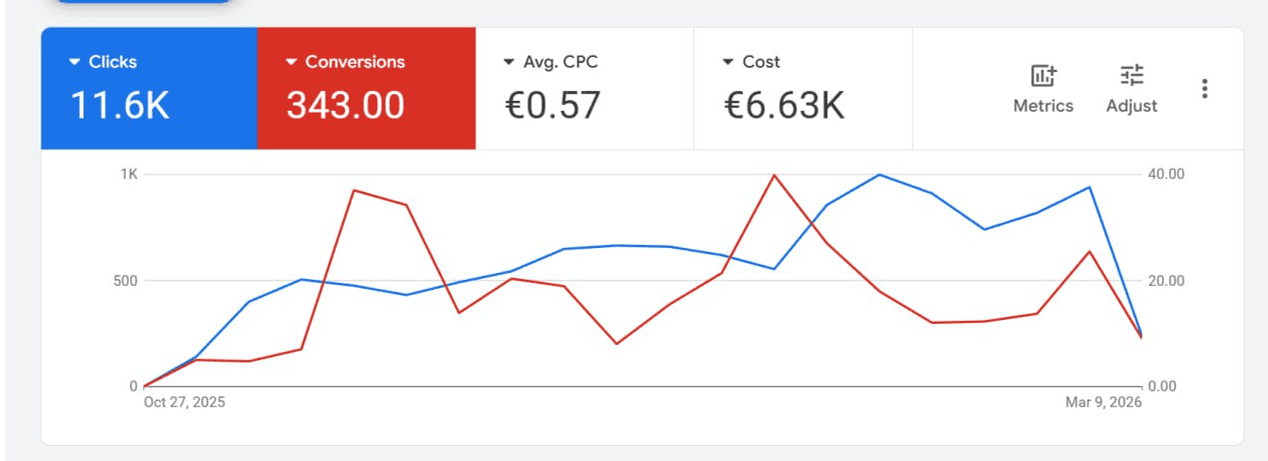
11,600 clicks · 343 conversions · €0.57 avg CPC · €6.63K spend — baseline period before audience and tracking rebuild.
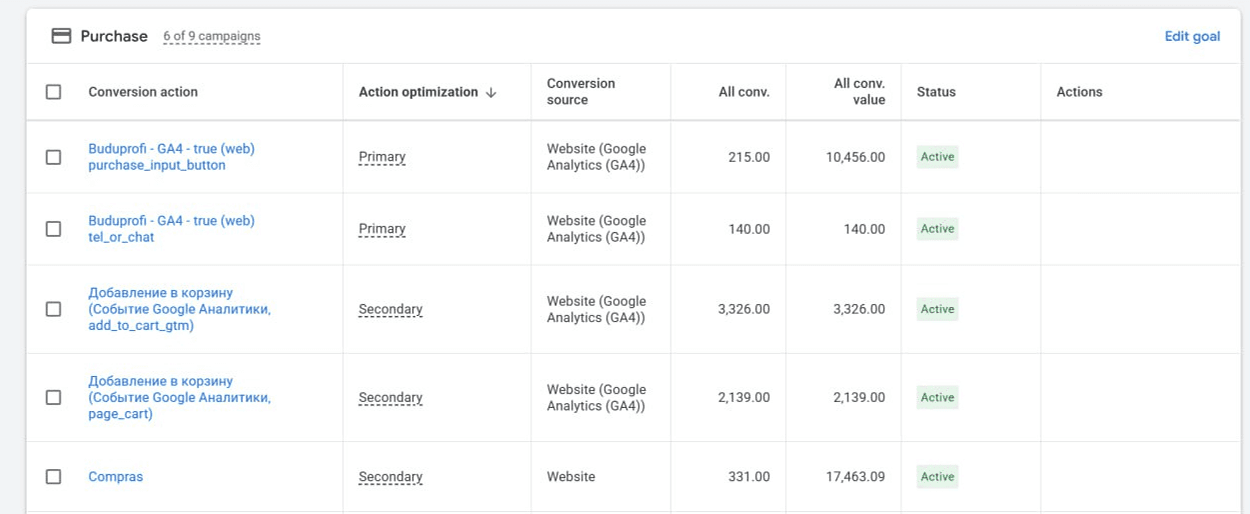
After rebuild: two GA4 purchase actions set as Primary (purchase button + phone/chat). Add-to-cart events demoted to Secondary — bidding optimises on intent-confirmed actions only.
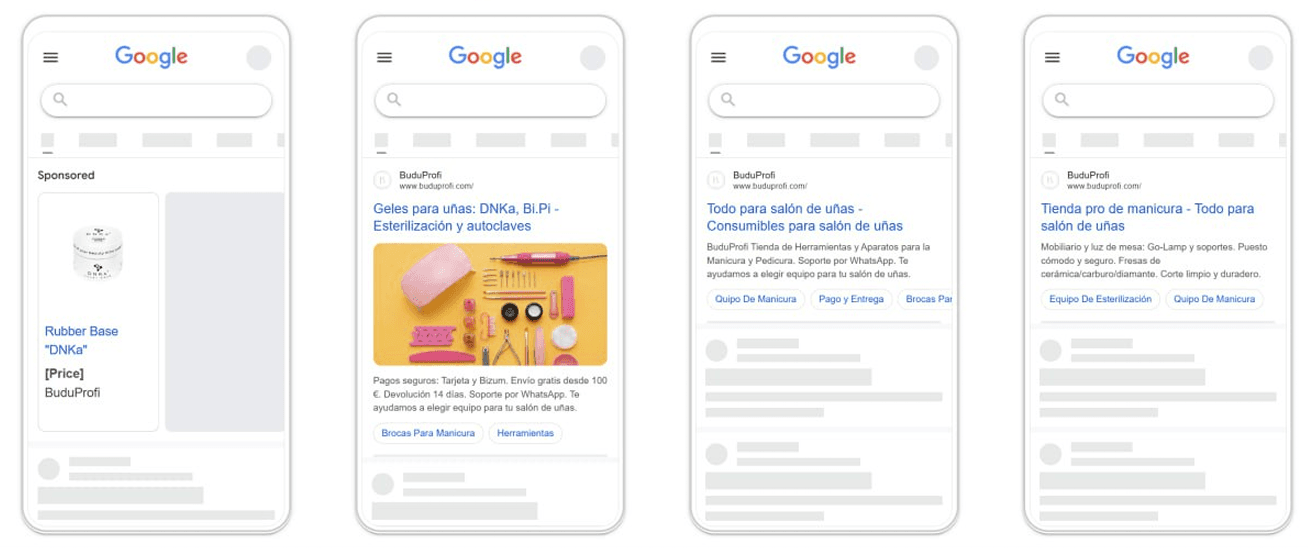
Headlines shifted to salon-buyer language: “Todo para salón de uñas”, “Tienda pro de manicura”. Sitelinks by product category replace generic CTAs.
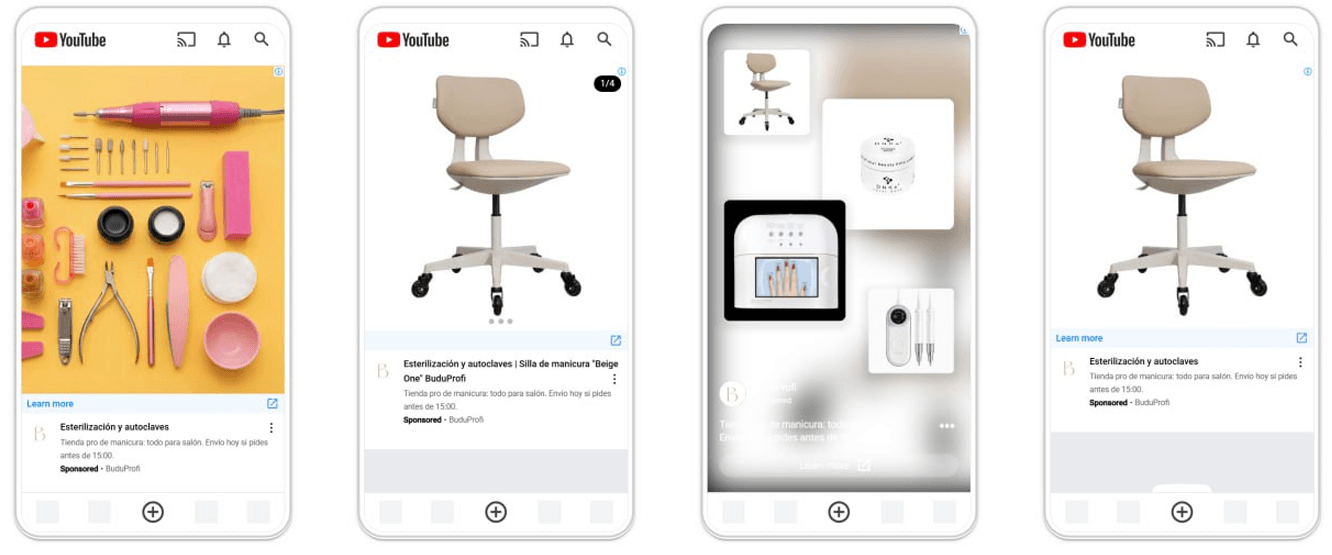
Professional equipment imagery (salon chairs, sterilisation units, product carousels) positioned for wholesale and network buyers — not individual master aesthetics.
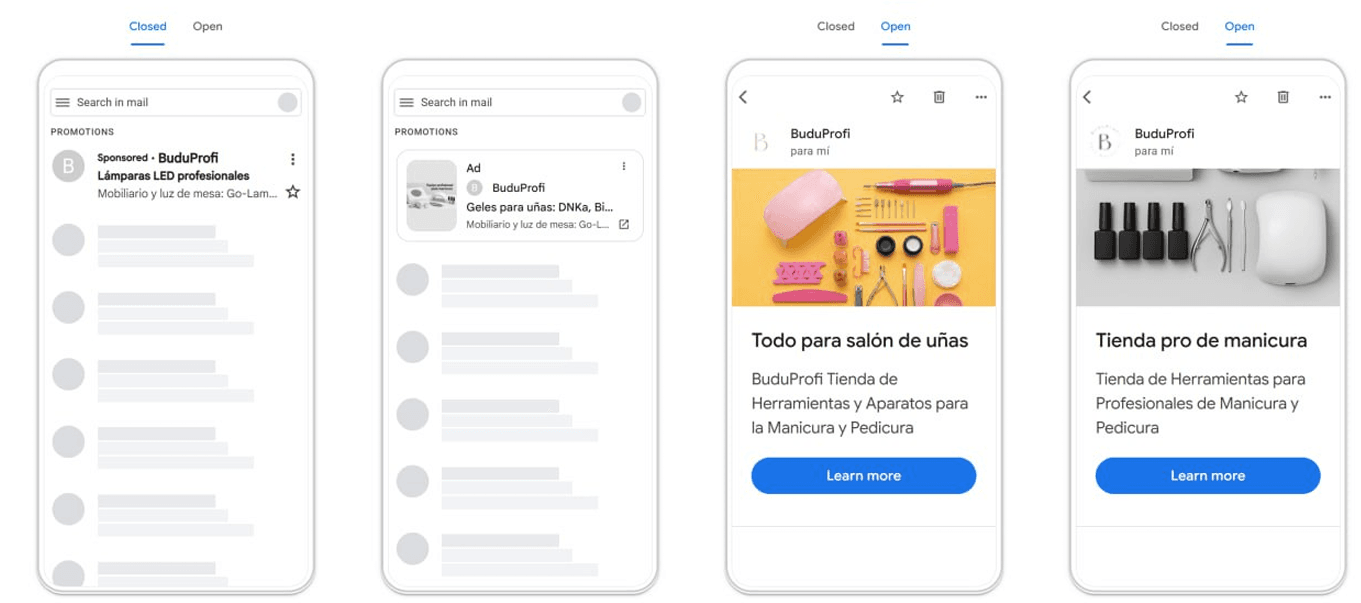
Gmail retargeting targets users who visited B2B product pages. Copy: “Todo para salón de uñas” · “Tienda pro de manicura” — reinforcing salon-buyer positioning in inbox.
When three GA/GA4 instances track the same traffic independently, you get three irreconcilable revenue figures. Each campaign looks different depending on which account you open. Decisions made on any one of them are made on noise. Unification isn't a nice-to-have — it's the precondition for any optimization to mean anything.
Individual manicurists convert well on low-AOV orders. They filled the funnel with activity that looked healthy in aggregate but destroyed unit economics. Smart Bidding learned this audience, scaled it, and made it structurally harder to reach salon buyers. Excluding individual manicurists was as important as adding the right segments.
Free Shopping listings attract users actively searching for specific product categories — not general services. In a B2B context, these tend to be purchasing managers and procurement teams rather than individual consumers. Setting up Free Listings with correct feed attributes effectively created a self-selecting B2B funnel at zero media cost.
If ads reach salon buyers but the landing page speaks to individual masters, the user arrives and immediately disqualifies themselves. The trust blocks, case studies by order size, and the 'Calculate for networks' CTA aligned the site with the audience the ads were now reaching — closing the gap between click and conversion.
Once audience segments were properly defined (salon networks, wholesale buyers, referral clients), retargeting stopped being a generic 'show ads to past visitors' exercise. Segment-specific retargeting matched messaging to purchase stage, which drove repeat order frequency upward and increased average repeat order value by 29%.
Target CPA optimisation scoped to salon chain and wholesale buyer segments — separating bid logic from individual master traffic entirely
Additional product bundles for salon networks, broader Free Listings coverage, regular feed refresh cycle to maintain placement quality
Dedicated campaigns for regions with existing chain density — feeding CRM audience data into geo-targeted upper funnel
YouTube and Gmail creatives built from real salon chain order sizes and testimonials — raising social proof ceiling beyond current trust blocks
Separate email and paid retargeting streams for existing clients (RFM segmentation) — driving repeat order frequency and protecting LTV gains
Three GA accounts unified into a single GTM source of truth. Audience rebuilt from individual manicurists to salon networks and wholesale buyers. By February 2026, every €1,000 of budget produced ≈€21,000 in sales — a 7× improvement over the ≈€3,000 baseline. Site conversion rate improved from 1.9% to 2.6% after messaging and UX alignment. LTV of salon-network clients grew to €2,350 (+31%), with repeat order volume increasing alongside it.
Fix: GTM unification · audience exclusions · Merchant Center · site messaging
ROAS: 3× → 21× · CVR: 1.9% → 2.6% · LTV: +31% · networks share: +16 pp
“Наконец мы видим прозрачные цифры по сетям и понимаем, куда каждый евро идёт. Это полностью сменило отношение к рекламе и показало, что мы можем масштабировать.”
Client name used with permission. Report ID is internal. Metrics reflect the February 2026 measurement period — results vary by market, product category, and audience maturity.